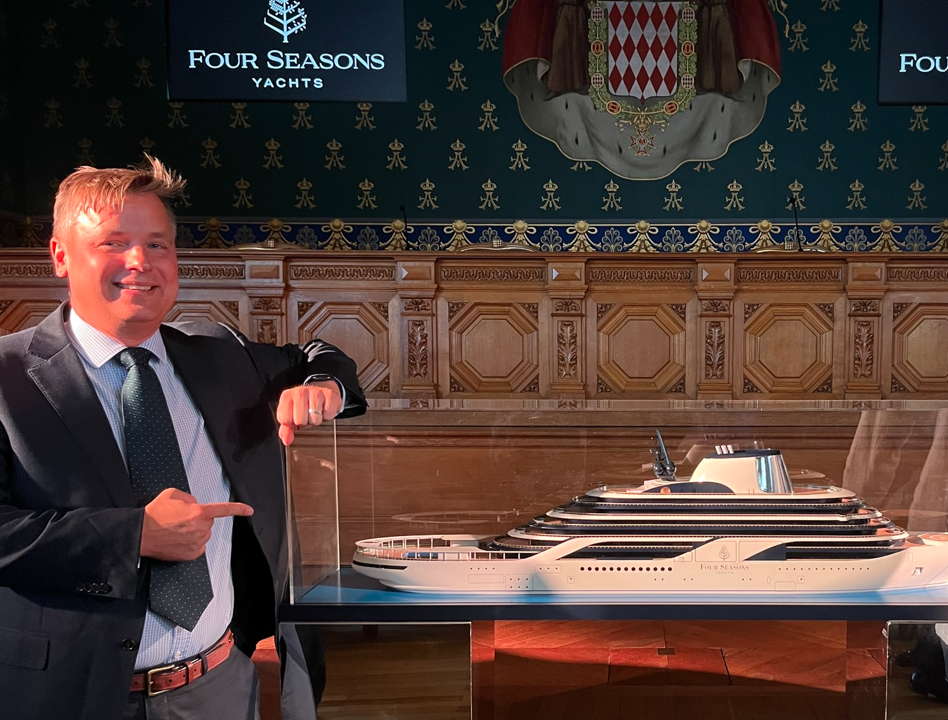
Last week, The Ritz-Carlton Yacht Collection named a new chief executive: its fourth CEO in roughly three and a half years.
I don’t watch this from the sidelines. I was part of the early team that built Four Seasons Yachts, and I have spent most of my career running cruise and expedition companies. When I wrote a short post about the leadership change on LinkedIn, it went viral: more than 80,000 impressions and 544 reactions, comments and reposts, an absolute personal record. It also started one of the best discussions I have seen on the subject.
That is why I want to dive deeper here. The question of whether great hotel brands can succeed at sea is not a niche industry debate any more. It is one of the most interesting business stories in luxury travel, and clearly one that many of you care about.
Full disclosure: I worked on the Four Seasons Yachts start-up. Everything in this article about Four Seasons comes from public sources.
One idea, very different ships
Hotel brands want to be at sea for good reasons. They have loyal, wealthy guests, strong brand equity and decades of experience in delivering personal service. Cruising offers them a new way to sell that experience, to customers who already trust the name.
But look closely and the brands have chosen very different models:
- The Ritz-Carlton Yacht Collection went first and went big. Its three ships carry about 300 guests (Evrima, 2022) and about 450 guests each (Ilma, 2024, and Luminara, 2025), with all-inclusive fares.
- Four Seasons Yachts launched Four Seasons I in March 2026: 95 large suites, priced by the suite like a hotel room, with most food and drinks charged separately.
- Orient Express launched Corinthian in June 2026, the world’s largest sailing yacht, with about 54 suites and many short two-to-four-night voyages.
- Aman is building Amangati, a single ship for about 100 guests, due to sail in May 2027.
Same ambition, very different bets on size, pricing and risk. And after four years, we can start to see which bets are working.
What the numbers tell us
The Ritz-Carlton Yacht Collection is the only hotel brand at sea with a long enough record, and published accounts, to judge.
The product has many fans, and revenue is growing fast. In the second quarter of 2026, cruise revenue rose 42% to $103 million, and the average daily rate per guest rose 7% to just under $2,000.
But the harder numbers are sobering. According to the Financial Times, the company has accumulated close to $700 million in losses since it was founded in 2017. It spent more than $100 million on marketing in 2025 alone. This year, lenders agreed to defer $171 million of repayments, and shareholders committed fresh equity, bringing total investment to more than $1 billion.
Most telling of all: occupancy in the second quarter was 51%, down from 57% a year earlier, as the third ship came into service. At these prices, a ship that sails half full cannot make money.
None of this surprised me. In September 2025 I asked whether this market was heading for an expedition-style correction: too much new capacity, chasing a small group of very wealthy travellers, at record prices. A month later, when the company talked about a possible IPO, I estimated that its marketing spend worked out at roughly $6,700 for every guest it attracted directly. The latest figures suggest the challenge has not gone away.
Four Seasons: a beautiful ship, still in its first season
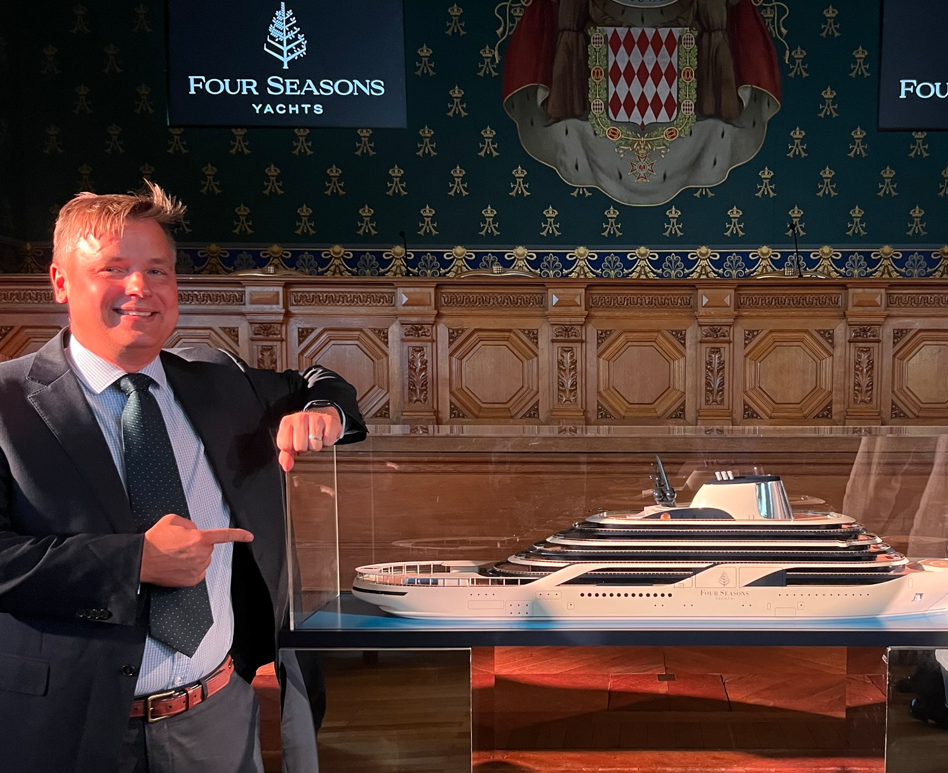
Four Seasons I is a different story, and it is still being written. It has only been sailing since March, and Four Seasons has not published any results.
Early reviews have been mixed. Fran Golden in Afar wrote that “space is the main luxury,” and Ben Schlappig of One Mile at a Time called the ship breathtaking, while noting that food and service did not yet always match the price. Hotel reviewer Ryan Walker’s hour-long video review, viewed nearly 750,000 times, was more critical of the onboard experience, though he expected some things to improve with time. Mixed early reviews are not unusual for a brand-new ship in its first season.
The pricing model is also different. Fares start at about $28,000 per suite per week, with most dining charged separately, while Ritz-Carlton’s fares include almost everything.
Four Seasons is already evolving the concept: its second ship will have 79 suites instead of 95, including large multi-bedroom residences, and will arrive in 2028.
Can three yachts ever make money?
There is one more question that few people ask out loud, and Larry Pimentel, the founding CEO of Four Seasons Yachts, put it perfectly in a LinkedIn post last week. Looking at Ritz-Carlton’s latest results, he asked whether three yachts can generate enough cash to service their debt, without another round of waivers, before the deferred repayments begin in January 2028. And if not, how does the model need to evolve?
The numbers behind his question are striking. In the first half of 2026, Ritz-Carlton’s operating cash flow was minus $78 million, $66 million of it interest. Shareholders put in $192 million over the same period.
This is not just a Ritz-Carlton problem. It is a scale problem for every hotel brand at sea. Ritz-Carlton has three ships. Four Seasons and Orient Express each have two confirmed, and Aman has one. Yet each of them needs a head office, a sales and marketing team, a reservations system, a technical and crewing operation and a global network of travel advisor relationships. Established luxury cruise lines spread those costs over many more ships. With two or three, every empty suite hurts more, and there is very little room for error.
The quiet winners so far
There is an irony in all this. The established luxury cruise lines seem quite happy with the arrival of the hotel brands, and I understand why.
Every launch by a famous hotel name has been great advertising for luxury cruising as a whole. The press coverage, the marketing budgets and the loyalty programmes have introduced cruising to wealthy travellers who would never have considered it before. Some of those new customers will stay with the hotel brands. Others will discover they love life at sea and try the traditional luxury lines next. Either way, the market has grown, and the hotel brands have paid much of the bill.
Why great hotel brands struggle at sea
So why do brands that run some of the best hotels in the world find this so hard? In my experience, it is rarely about the people at the top. It is about how these ventures are set up.
1. Expectations that were never realistic. A famous name does not fill a ship in year one. Selling a $20,000 week takes time, travel advisor relationships and patient effort. When the business plan assumes 85 to 90% occupancy from the start, the results will always look like failure, and leaders become the shock absorbers.
2. Too much debt, too early. Ships cost hundreds of millions of dollars before the first guest steps on board. When results lag, shareholders face cash calls, and patience in the boardroom runs out quickly.
3. A hotel stays put; a ship does not. A hotel has one location, one set of rules and a stable team. A ship changes country every day, with different regulations, suppliers and logistics, and its crew rotates every few months. Delivering top hotel-level luxury in those conditions, far from head office, is a different discipline.
4. Unclear roles between brand owner and ship owner. Most of these ventures split the work: one party owns the brand and sets the standards, another owns or runs the ships. Complex agreements create gaps that nobody owns and overlaps that people fight over. As Larry Pimentel noted, so much depends on alignment between the two.
5. Loyalty does not transfer automatically. Millions of hotel loyalty members are a great head start. But a hotel guest who loves a weekend at a resort is not automatically a guest who will spend a week at sea. Building a following of people who keep coming back at these prices takes years of consistent delivery.
And every leadership change makes it harder. Each reshuffle resets relationships with travel advisors, partners and crew, and pushes the sales ramp-up further out.
What the industry added
The comments on my LinkedIn post were so good that they deserve a place here.
A board advisor who has worked with Four Seasons on its private jet experiences made a sharp distinction: extending a luxury brand into a new experience, with specialist partners doing the hard operational work, is very different from building an entirely new business around it. A senior officer at a major cruise company reminded us that the crew absorb every change at the top, and need consistency more than anything. A ship management CEO put it simply: too many egos pulling in different directions, and too little effort to make sure the team is actually aligned.
One veteran of several cruise start-ups disagreed with the gloomier views: he believes the demand is there, and that the problems were mostly self-inflicted. I think he is right, and that is actually the hopeful part. Self-inflicted problems can be fixed.
Which model will win?
On a post I wrote last year, several luxury veterans made a point I have not been able to forget. Above roughly 200 to 280 guests, they argued, true luxury at sea breaks down. One of them put it best: once the crew can no longer greet every guest by name, you have lost the essence of luxury.
That gives us a simple test for every hotel brand at sea: can your crew know every guest by name?
On that test, the early evidence favours smaller ships, like Aman’s and Orient Express’s, over larger ones. It favours partnerships with experienced maritime operators over trying to learn everything in-house. And it favours brands that invest in advisors and repeat guests rather than in advertising.
Most of all, it favours patience. Luxury at sea is a fantastic business, and all of these products are genuinely impressive. But it rewards time, deep maritime know-how and one clear line of responsibility. Brand owners and investors who give these ventures that will be rewarded. Those who expect a hotel opening timeline will keep changing CEOs.
The leadership lesson
There is a lesson here that goes beyond cruising.
A brand is a promise. On land, the promise is kept by a hotel team that works together in one place for years. At sea, it is kept by a crew that changes every few months, in a different port every day, far from the people who wrote the strategy.
That only works if every crew member understands why the promise matters and what it means for them, at breakfast, at the marina and at the end of a long day. No brand name can do that for you. Only leadership can.
Hans Lagerweij is an interim and growth executive who has led cruise and expedition companies including Quark Expeditions, Victory Cruise Lines and Albatros Expeditions, and was part of the early Four Seasons Yachts team. He is the author of The Why Whisperer, now also available as an audiobook. For regular updates on cruise and travel, follow me on LinkedIn or subscribe to my free newsletter.